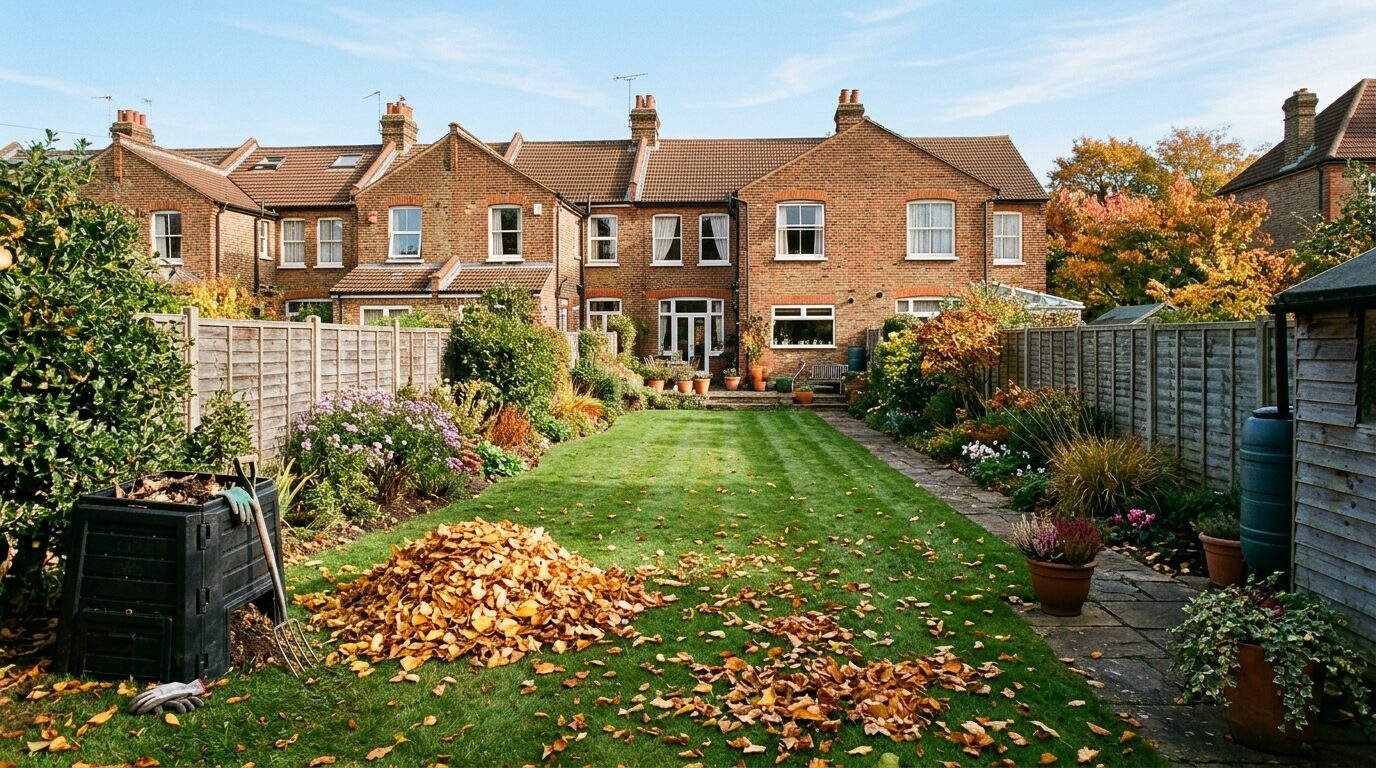
As November winds strip the final golden foliage from Norbury’s mature street trees and suburban gardens, SW16 householders face the annual seasonal chore of clearing fallen autumn leaves, cutting back perennial borders, and preparing gardens for the winter freeze. With generous back gardens typical across western Norbury’s cottage estates and the steep slopes of Pollards Hill, seasonal garden waste can rapidly accumulate into sizeable heaps of wet foliage and woody prunings.
While clearing paths and lawns is vital to prevent slippery pavements and decaying turf, local environmental officers and fire services urge residents to handle garden waste responsibly. By understanding Croydon Council’s dedicated garden waste collection service, home composting methods, and the strict legal rules governing domestic garden bonfires, Norbury gardeners can manage autumn debris cleanly, economically, and legally.
Croydon’s Fortnightly Garden Waste Collection Service
For householders who generate steady green waste throughout the year, Croydon Council operates a dedicated, subscription-based kerbside collection service:
- The Brown Wheelie Bin: Subscribed properties receive a 240-litre brown wheelie bin collected fortnightly on a scheduled weekday throughout the calendar year.
- Acceptable Materials: The brown bin is designed for compostable plant organic waste, including fallen leaves, lawn cuttings, weeds, cut flowers, hedge trimmings, and small prunings or twigs up to the thickness of an adult wrist.
- Prohibited Items: Soil, turf, rubble, stones, treated timber, large tree trunks, plastic plant pots, and invasive species (such as Japanese knotweed) must never be placed in garden bins, as they contaminate municipal industrial composting loads.
- Subscription and Renewal: The service is managed entirely online via Croydon Council's waste portal at croydon.gov.uk. Residents are issued a seasonal subscription sticker that must be displayed clearly on the bin lid to ensure collection crews empty it.
Leaf Mould and Home Composting: Free Soil Improver
Rather than paying to haul leaves away, keen Norbury gardeners can convert fallen deciduous foliage into rich organic soil improver right at home. Autumn leaves break down through fungal decomposition rather than the bacterial heat of a standard compost heap:
- Simple Wire Leaf Bins: A simple cylinder made of garden wire netting staked in a shaded corner allows air to circulate around wet leaves. Filled in November, leaves break down over 12 to 24 months into dark, crumbly leaf mould that acts as an exceptional water-retentive mulch for flowerbeds.
- The Bin Liner Technique: For smaller gardens, pack damp autumn leaves into recycled black refuse sacks, puncture half a dozen drainage holes in the base and sides with a garden fork, tie the top loosely, and stack them in an out-of-the-way garden corner until next autumn.
- Home Compost Bins: Croydon Council partners with national subsidised home composting schemes, offering discounted plastic compost bins for residents wishing to compost garden prunings together with uncooked kitchen fruit and vegetable peelings.
Garden Bonfires: Understanding the Legal Rules and Health Hazards
As the air cools around Bonfire Night, some householders consider burning damp garden cuttings in backyard bonfires. However, burning green garden rubbish in densely populated suburban streets like Norbury creates serious health, environmental, and legal problems:
- No Automatic Right to Burn: Contrary to a common urban myth, there are no designated legal days, hours, or times of the week when garden bonfires are permitted. While having a bonfire is not outright banned by national law, burning damp garden waste in a residential neighbourhood is strictly regulated under the Environmental Protection Act 1990.
- Statutory Smoke Nuisance: If smoke, acrid fumes, or ash from a garden bonfire unreasonably interferes with neighbours' enjoyment of their homes or gardens—preventing them from opening windows, drying laundry, or using outdoor space—it constitutes a statutory nuisance. Croydon Council's Environmental Health team holds legal powers to issue formal Abatement Notices against persistent offenders, with court fines reaching up to £5,000 for non-compliance.
- Respiratory and Air Quality Risks: Norbury sits within London’s borough-wide Air Quality Management Area. Damp leaves and green foliage produce heavy concentrations of fine particulate matter (PM2.5) and poisonous carbon monoxide, which severely aggravate symptoms for children, the elderly, and residents living with asthma, COPD, and bronchitis.
- Highway and Safety Hazards: Under the Highways Act 1980, allowing bonfire smoke to drift across a public road—such as London Road, Green Lane, or residential side avenues—and endanger road users by obscuring visibility is an immediate criminal offence carrying heavy police fines.
Factory Lane Recycling Centre for Bulky Green Clearances
For large one-off garden clearances following autumn storm damage or hedge renovation, Norbury residents do not need to rely on kerbside bins or risky bonfires:
- Free Domestic Disposal: Croydon residents can take excess green waste free of charge in a standard domestic car to the Factory Lane Household Reuse and Recycling Centre (HRRC) near Waddon.
- Proof of Address: Visitors must bring valid proof of borough residency (such as a driving licence or current council tax bill) to enter the site.
- Recycling Process: Green garden waste deposited in the dedicated bays at Factory Lane is shredded and sent to regional commercial composting facilities to produce high-grade soil conditioner for agriculture and landscaping.
By composting leaves at home, utilising the fortnightly brown bin, and avoiding antisocial bonfire smoke, SW16 residents can keep Norbury’s air clean and neighbourhood streets pleasant for everyone throughout the late autumn season.