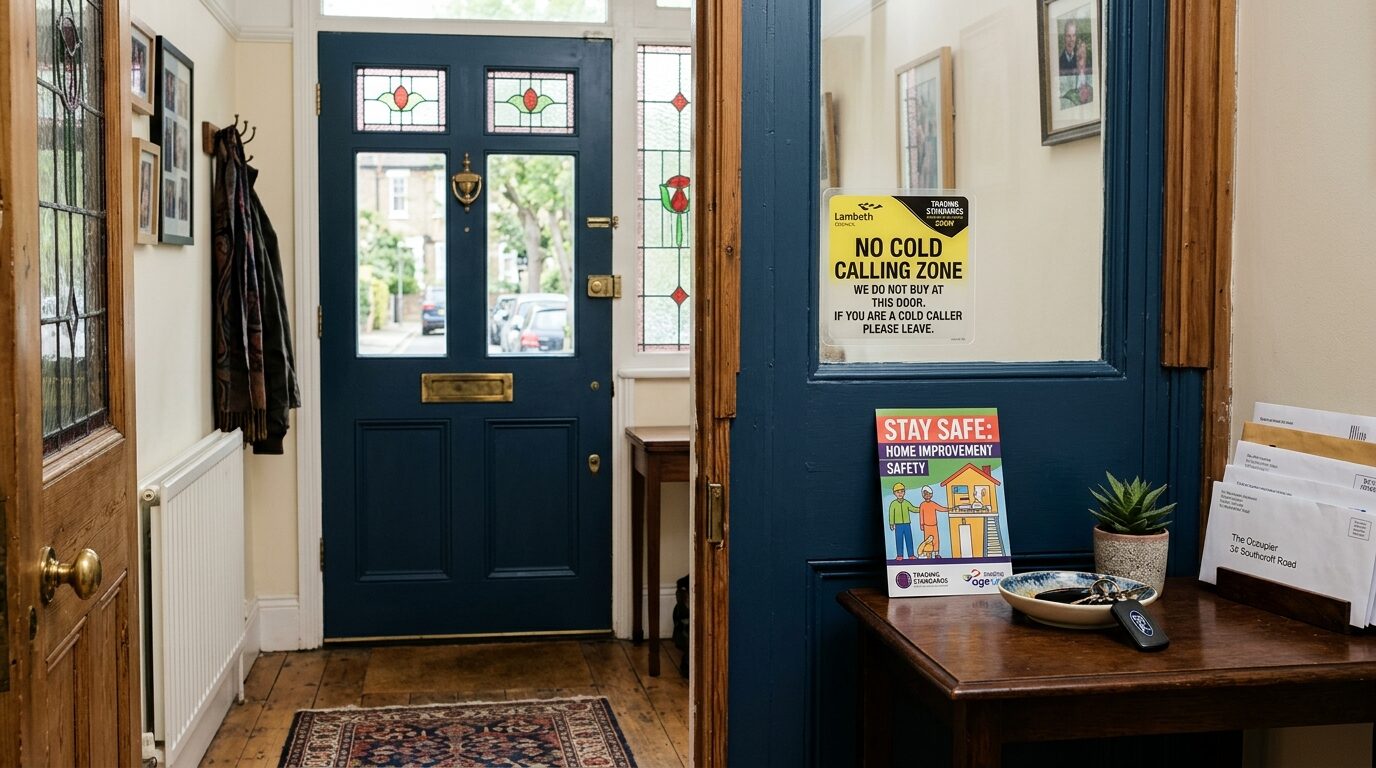
As colder winter weather takes hold across South London, householders in Norbury SW16 often find themselves in urgent need of exterior maintenance—from clearing clogged gutters and replacing slipped roof slates to tree trimming and driveway patching. However, civic authorities and the Metropolitan Police warn that winter is also peak season for opportunistic doorstep callers and rogue traders targeting suburban neighbourhoods.
While genuine local builders and tradespeople operate transparently across Croydon and Lambeth, uninvited callers often employ high-pressure tactics, claim urgent structural damage that does not exist, or quote artificially low initial estimates before demanding escalating cash payments. To protect homeowners, tenants, and elderly neighbours, Croydon Council’s Trading Standards team outlines key statutory rights, red flags, and verified protection routes.
The 14-Day Cooling-Off Rule: Your Legal Rights at the Door
Under the UK’s Consumer Contracts (Information, Cancellation and Additional Charges) Regulations 2013, householders possess clear legal protections when entering into agreements on their doorstep:
- Statutory 14-Day Cancellation: Any contract agreed at your home worth more than £42 carries an automatic 14-day cooling-off period by law.
- Mandatory Written Notice: The trader must provide written cancellation details and a cancellation form at the time the agreement is made. If a trader fails to supply this written notice, your right to cancel is extended by up to 12 months, and starting work without providing written cancellation rights can be a criminal offence.
- Urgent Emergency Repairs: If you explicitly ask a tradesperson in writing to begin urgent repairs immediately during the cancellation window, you may still be liable to pay for the reasonable cost of work completed up to the date you cancel, but reputable firms will always document this clearly.
Key Red Flags: How to Spot Rogue Callers
Croydon Trading Standards highlights several warning signs commonly associated with rogue doorstep operators:
- Unsolicited Calls About 'Urgent' Defects: Callers who knock unannounced claiming they "just noticed broken chimney pots" or "dangerous ridge tiles" while working on a neighbouring house.
- Unmarked Vans and Lack of Paperwork: Vehicles without professional company livery, or contractors who cannot provide a landline phone number, registered postal address, or formal written estimate.
- Demands for Immediate Cash: Pressure to hand over immediate cash deposits for "materials" or insisting on driving elderly residents to local cash machines along London Road.
- 'Today Only' Price Reductions: Using artificial urgency—such as claiming special leftover tarmac or sealant from another local job that must be used within the hour.
Norbury's No Cold Calling Zones
Following community consultations, Croydon Council established designated No Cold Calling Zones across parts of Norbury to deter uninvited commercial callers and protect vulnerable residents. While cold calling itself is not automatically an illegal act, entering a property displaying an unambiguous "No Uninvited Traders" notice and refusing to leave can constitute an offence under the Consumer Protection from Unfair Trading Regulations.
Norbury residents can download printable window cards and door stickers directly from Croydon Council’s Trading Standards pages, or request safety packs through local Safer Neighbourhood Ward Panels.
Practical Tips Before Hiring Any Tradesperson
If your home requires seasonal roof, brickwork, or tree maintenance, local consumer protection officers recommend five practical golden rules:
- Never Agree at the Door: Politely decline any uninvited doorstep offer. Keep front doors closed or on a safety chain if speaking to unannounced callers.
- Obtain Three Written Quotes: Always source at least three independent, itemised written quotes from established, traceable firms.
- Use Council-Approved Schemes: Search for tradespeople verified by Trading Standards schemes such as Buy With Confidence (buywithconfidence.gov.uk) or accredited trade bodies such as TrustMark and Checkatrade.
- Avoid Large Upfront Deposits: Never pay in full upfront. For larger jobs, agree to stage payments linked to verified, satisfactory completion milestones.
- Look Out for Neighbours: Rogue callers frequently target older or isolated residents. If you notice unfamiliar unmarked commercial vans parked outside an elderly neighbour's home for extended periods, check in with them or report suspicious activity.
Where to Report Concerns
Residents who encounter suspected rogue traders, aggressive doorstep selling, or substandard building work can report details through official channels:
- Citizens Advice Consumer Service: Call the national consumer helpline on 0808 223 1133 for free, confidential guidance and direct referral to Croydon Trading Standards.
- Metropolitan Police: If a doorstep caller becomes aggressive, refuses to leave your property, or attempts intimidation, dial 999 in an emergency or 101 for non-urgent reports.
- Action Fraud: Report completed fraud or financial scams online at actionfraud.police.uk or call 0300 123 2040.