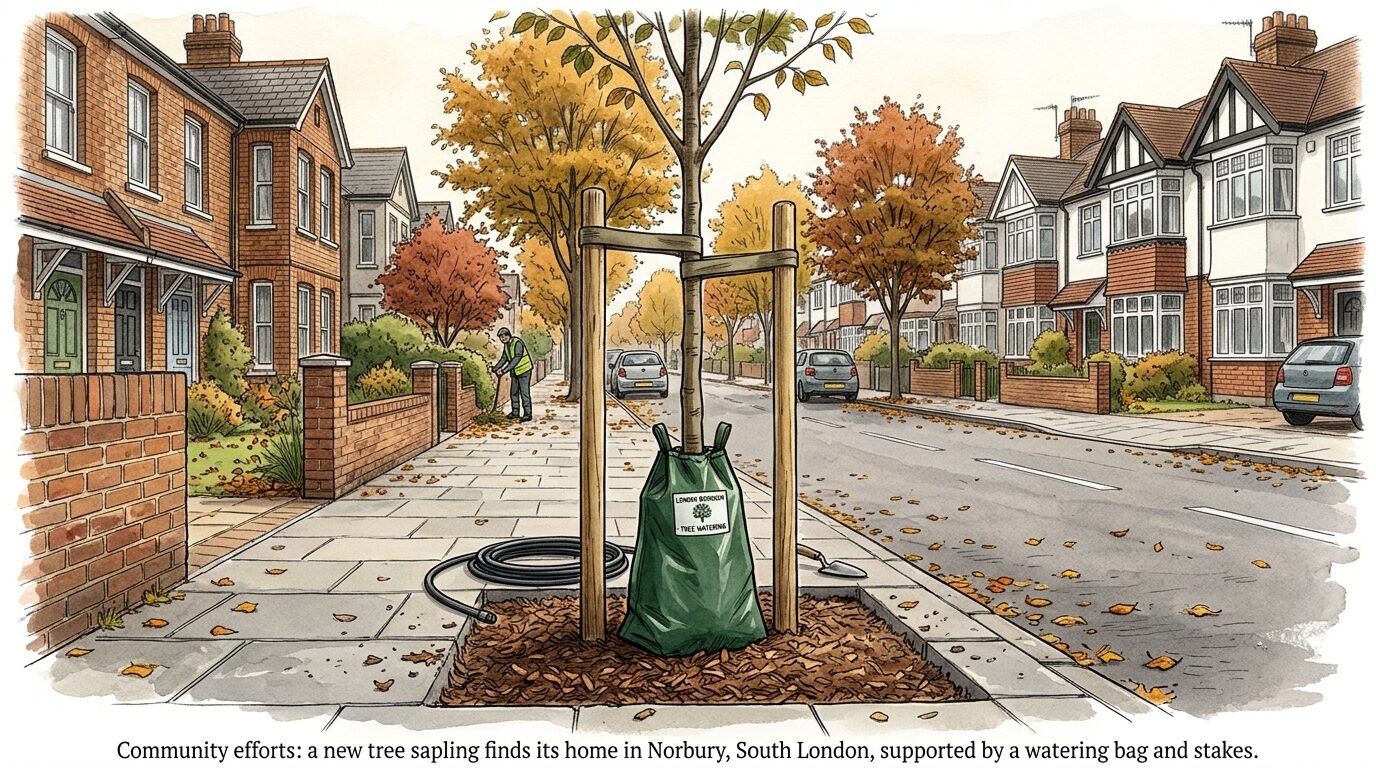
As autumn leaves fall and cooler weather sets in across South London, the dormant winter planting window approaches—bringing a timely opportunity for Norbury SW16 residents to bring more greenery to their doorsteps. Through Croydon Council’s ongoing partnership with the national charity Trees for Streets, householders and community groups can directly sponsor, choose, and nurture new street trees outside their homes or across neighbourhood roads.
Urban street trees play a recognized role in cooling suburban pavements during heatwaves, absorbing stormwater runoff, improving air quality along busy corridors, and enhancing the visual character of residential avenues. For Norbury, where broad Edwardian and 1930s avenues meet heavily trafficked thoroughfares connecting to London Road, community-led planting offers an accessible way to infill empty tree pits and replace lost canopies.
How the Sponsorship Scheme Works
Trees for Streets is the national street tree sponsorship scheme backed by the charity Trees for Cities and Start with Local, collaborating with local authorities nationwide. In Croydon, the scheme bridges the gap between civic ambition and municipal resources by allowing residents and businesses to co-fund planting:
- Choose Your Location: Using an interactive online map, Norbury residents can request a tree directly outside their house or nominate a specific spot along a local street or grass verge.
- Council Survey and Approval: Croydon Council’s tree officers assess each nominated location to verify ground suitability, ensuring there are no clashes with underground utilities, sightlines, driveways, or street lighting.
- Winter Planting: Once approved, professionally sourced, sturdy saplings (usually 3 to 4 metres tall) are installed during the dormant planting season, which runs from late autumn through early spring.
Watering Commitment and Contribution Options
Young trees require significant care during their first two summers to establish deep, resilient roots. The scheme offers two primary participation models depending on whether sponsors can assist with watering:
- Resident Watering Option: Sponsors who commit to watering their new tree regularly throughout the spring and summer months (providing approximately two large watering cans twice a week) benefit from a substantially discounted sponsorship contribution.
- Council Maintenance Option: For residents who wish to donate a tree but are unable to undertake weekly watering duties, a higher contribution level enables the council’s arboricultural contractors to manage scheduled watering visits.
- Neighbourhood Crowdfunding: Streets and resident groups can also pool smaller contributions through community crowdfunding pages to sponsor trees collectively for their avenue or a nearby park approach.
Greening Norbury’s Microclimate
According to arboricultural experts and urban forestry guidelines, street trees provide measurable microclimatic and wellbeing benefits in suburban London:
- Surface Cooling and Shade: Mature leafy canopies reduce the urban heat island effect, keeping asphalt and brick facades cooler during intense summer sun.
- Sustainable Drainage: Tree root networks and unpaved planting pits help intercept rainfall and slow surface run-off into local storm sewers and tributaries like Norbury Brook.
- Biodiversity Corridors: Street trees act as stepping stones connecting larger green havens such as Norbury Park, Norbury Hall Park, and Biggin Wood, supporting pollinators and bird populations.
Practical Guide for SW16 Residents
- Where to Apply: Norbury residents can inspect local street coverage and submit a planting request at treesforstreets.org or via the council's trees directory at croydon.gov.uk/environment/trees-and-hedges.
- Existing Street Tree Issues: For damaged branches, dead trees, or empty pits requiring safety maintenance, residents should report directly via Croydon Council's Love Clean Streets app or portal.
- Tree Species Selection: Council tree officers select hardy, non-invasive species tailored to suburban street widths and soil conditions, ensuring long-term resilience and pavement compatibility.